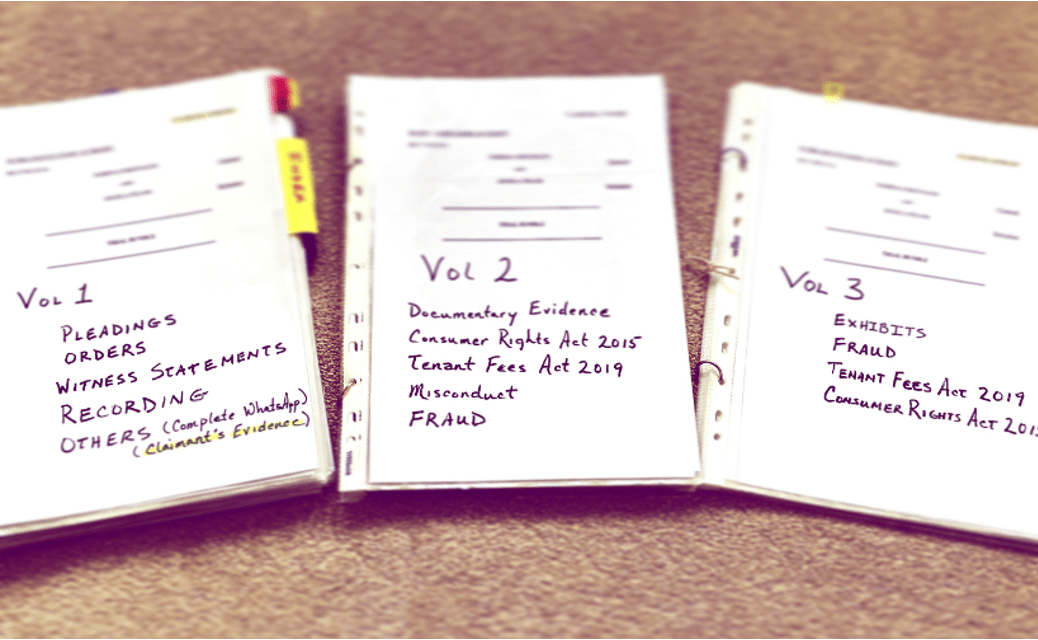
Having first hand experience of representing myself in the small claims court and the benefit of hindsight, having worked as a litigation executive for almost a year, now I would say 100% I would do it all again – but do it all again differently.

“What’s the worst thing that could happen? You lose.”
Hi, I’m Angela, a (soon to be) trainee solicitor. I guess I was lucky as growing up, I always knew this was what I wanted to be. Every decision I’ve made was to try and make that dream come true. Like most people who grew up in the same area as me, I couldn’t wait to move to the city. I studied my LLB at Birmingham and decided to move to London to do the LPC. I thought it would be the start of something amazing – the job opportunities/lifestyle would be better. Instead, I met the WORST landlord. Almost 2 years of my life I’ve spent fighting a court battle against her (who, luckily for me, also happened to be a property solicitor). Whilst this was the best work experience I’ve ever had, it was also the most terrifying and stressful experience of my life. I decided to write this blog to share my story, raise awareness and hopefully prevent anyone else from making the mistakes I did.
I’LL NEVER HAVE TO GO TO COURT
If you asked me 2 years ago, I never would have imagined I would find myself in this position. If you are taken to court, I assumed it’s because you’ve done something wrong. Maybe as a law student, that was a really naive way of thinking – but unfortunately, there are cases where you can be forced to defend yourself, even if the other side has no evidence at all.
There are always going to be a few, malicious landlords out there who try to take advantage — Students, I hate to say it, but you are the most vulnerable. Imagine, for most of you, it’s probably the first time you are renting away from home. You are already stressed enough and pulling all nighters just to finish your essays before the deadline. There is no way you’ll have the time it takes to research the law and figure out if there is a way to end your agreement. Chances are, you’re broke too (spending all your student loan on take-out…). Lawyers are expensive and their costs can very quickly build up. In any case, just the thought of having to go to court is terrifying!! I know I am one of the lucky ones to have been able to defend myself – thanks to my family. But not everyone will have a team of people that will spend hours, day after day researching the law to let you continue with your studies. There will have been students before me that put up with being treated with less than human respect just because they thought they had no other option – there will be students after me that think that too – but even if I help just one other person this blog will have been worth it, (figuring out what on earth ‘coding is’ will have been worth it).
Background
So now that my case is FINALLY over, I’m able to disclose the details:
My landlord’s claim was for outstanding rent owed under a Lodger’s Agreement. I signed the Agreement and subsequently gave her notice that I was terminating 2 months later, even though there was no break clause in the Agreement.
My counterclaim was that I was entitled to do this, primarily focusing on the arguments of misrepresentation and duress:
Duress
I was moving to London for the first time, so naturally, my parents were concerned to find me a property in a very safe area. Through a mutual friend, we were introduced to my landlord, who described herself as a property solicitor, that had worked for magic circle firms. She promised to mentor me and help me through the LPC, assured me that her property was females only and I would only be living with her, that her property was very quiet and ideal for a post-graduate.
As this sounded perfect for me, I paid her a holding deposit to have the property taken off the market. According to the Tenant Fees Act 2019 – the Agreement should have been delivered to me within 15 days. Instead, she gave it to me over 1 month later, 2 days before I was due to view the property and 3 days before I had to move in.
On the day I viewed the property, my landlord kept me waiting all day for her. When she finally met with me, she afforded me less than 15 minutes of her time to show me the area, walk me to her flat, quickly show me around, get me to sign the agreement and transfer the money to her account.
Misrepresentation
As soon as I signed the Agreement, I was made to feel like I had signed away all of my rights. She informed me after that I would have to share with AirBnB strangers, a couple, for the first week of my stay. I know that as a lodger, a bedroom lock is not to be expected. But I have never in my life used a bathroom with no lock, much less, with only a sliding glass door, that affords you no privacy at all! I would shower or use the bathroom and they would constantly walk in on me. When my landlord returned to the property, she would invite male guests over who would walk into my bedroom and wake me up in the middle of the night.
The flat was also far from quiet – every night, she would blast her TV/music until 3/4am. Even when I told her I had early morning exams the next day. I was always quite an active student in class, always prepared, but the noise became so bad, I didn’t have sleep for days on end. I was becoming mentally and physically ill, which, of course, started to effect my performance in class. My tutors started to notice and referred me to my personal tutor, who suggested I transfer my course online and move home to live with my parents.
My living situation became so bad that I would have to spend nights sleeping on the floor of my friends house. The University of Law even set me up with their emergency accommodation and my welfare officer called me every night just to make sure I was safe.
The property had 1 table – that I was forbidden from using. There was no where else to study – so how it could possibly be advertised as ‘ideal for students’ is beyond me.
I finally resorted to seeking legal advice and was informed that I was entitled to terminate the agreement with immediate effect, due to my landlord’s misrepresentations alone. I did this in November. My lovely landlord waited until New Years Eve to submit a court claim against me.
So looking back, it’s easy to say that I should have noticed all the faults with the property. I viewed it first and then signed it. But at least moving forward, I’ll now know to look for things like locks on bathroom doors.
Preparing for Court
If you do the LPC, you’ll remember our interviewing assessment – (as if I thought that would be the most stressful thing I had to do this year) – you need to weigh up the pros and cons of different options for your client. We learnt that going to court was stressful and time-consuming. So that is exactly what I advised my ‘client.’ I never appreciated the full extent of this until I went through it myself:
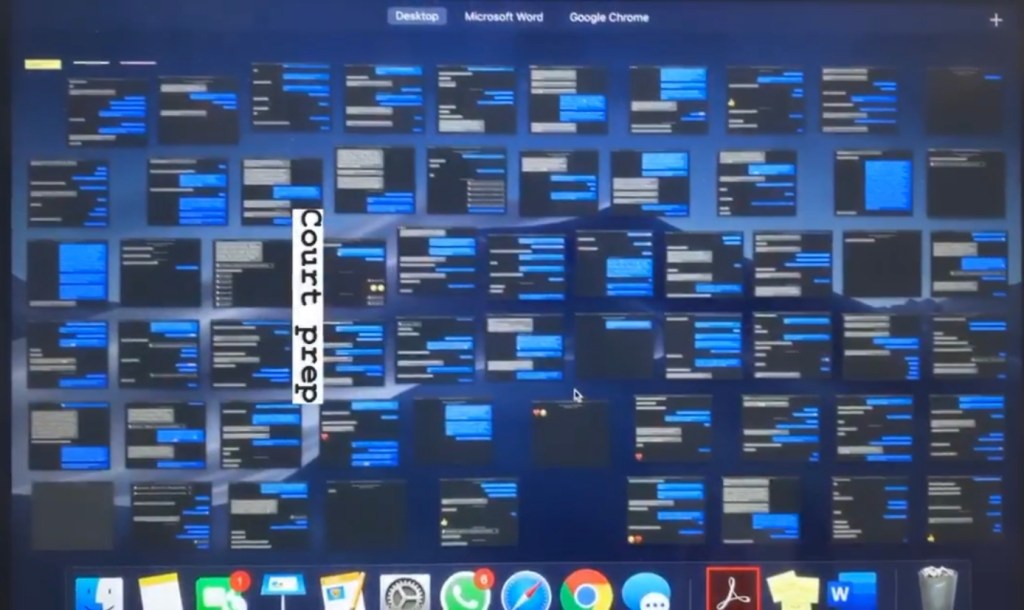
Just to put ‘time-consuming’ into context for you – I would say my case was a relatively straightforward one – and yet it took up 3 full days of court time and took around 1.5 years to finalise.
They say stress becomes you – it really does. When I received my first court notification – I couldn’t eat or sleep for days. Definitely a New Years’ Eve to remember!
The experience did not just effect me – what I resent the most is that it effected the people I love – my family that helped me prepare for my case and my friends who had to put up with me talking non-stop for months. Whenever I become really stressed, I cook (or attempt) to calm me down. The night before the deadline for submitting evidence, I offered to cook for my family. I must have been out of my mind because I also offered to do the washing up — I cleaned the knife and placed it in the drying rack, not thinking and placing it facing upwards. When my dad went to close the window, he slipped and I swear I saw the knife go straight through his elbow!! I binge watch Grey’s Anatomy so fancy myself as a surgeon so you know it’s accurate when I say I saw his bone…
As if that wasn’t bad enough, the next day, I boiled the kettle to make us all a hot ginger drink. I would definitely recommend, it has all kinds of health benefits – rumour has it can even cure covid (don’t quote me on that). It’s supposed to burn when you drink it, like the strongest vodka shot you’ll ever try, so we didn’t think twice when it felt like our throats had been set on fire. It wasn’t until we had drank most of it that I realised my mum had poured de-scaling fluid in the kettle and I hadn’t washed it out…
So yes, this plus the global pandemic, I think it’s safe to say 2020 has been the worst year of my life to date.
Court Hearing (1)
On the day of the court hearing, as it was a telephone hearing, the notice that was sent had instructions which clearly stated that when the other party was giving their evidence, you should mute the telephone to ensure there are no distractions. That is exactly what I did – but when it came time to me giving my submissions, my landlord would CONSTANTLY interrupt me or make noises to try and distract me. As if I wasn’t already nervous, having to go up against an experienced, qualified lawyer! I remember getting half way through my submissions and crying – not like a few tears, but the kind of cry where you get the worst headache afterwards because you’re so dehydrated and all you can do is sleep.
As well as putting me at a severe disadvantage, her actions just delayed everything. Giving our submissions alone took ALL DAY for a claim in the small claims court that was initially scheduled for 4 hours. So of course the Judge had to schedule another full day for cross-examination and closing arguments.
** DO NOT COMPLAIN ABOUT THE JUDGE **
After the first hearing, I complained about the Judge and requested another one. I felt like he had lost control of the hearing (allowing it to continue all day and have to schedule another entire day). He acted in an extremely unprofessional manner, favoring my landlord – laughing and joking with her and disregarding any comment I made.
But one thing I wish I knew, is that if you complain about the Judge and request another one, the complaint is sent to them and they have to decide whether or not to recuse themselves…
Cross-Examination / Court Hearing (2)
The next hearing was supposed to be for cross examination and closing arguments. After how my landlord behaved in the first hearing, I knew I needed someone on my side that was an expert. Instructing a barrister to take over was the BEST decision I made in this court hearing, by far.
I haven’t even started my training contract yet, my practical experience in law is still limited, but even I knew that you cannot just give evidence. You need to be cross-examined on it, but on the day, my landlord showed up completely unprepared, in her own words, and said she had not prepared questions for me. Instead, she wanted to read out a ‘summary’ she had written. Don’t be fooled, this summary wasn’t a short conclusion – it took over an hour, with her basically telling the court how much of a liar I am. Despite all of my evidence to the contrary, every opportunity she got, she would constantly say how I was just ‘fabricating’ stories. The worst part is, the Judge allowed her to do this.
So after what felt like an eternity, my barrister was allowed to cross-examiner her, and he did the most amazing job, catching her out in all of her lies.
The Judge then let her cross-examine me – so how did I prepare to answer her questions? The obvious first step is to think about all the arguments you want to make. That’s the easy part, especially if it is for your own case, you become very emotionally invested. I had countless voice notes and random messages on my phone, even resorted to keeping a note pad beside my bed in case I had any ingenious moments! But you also need to think of all the possible counter-arguments the other side might raise. After I jotted down all the questions, I then got my mum to pretend to be my landlord – it’s always good having someone on your side that might pick up on points you haven’t. I then studied. Hard. Exactly like it was an exam, using flashcards with the points I wanted to raise, having my parents ‘test’ me on the correct answers.
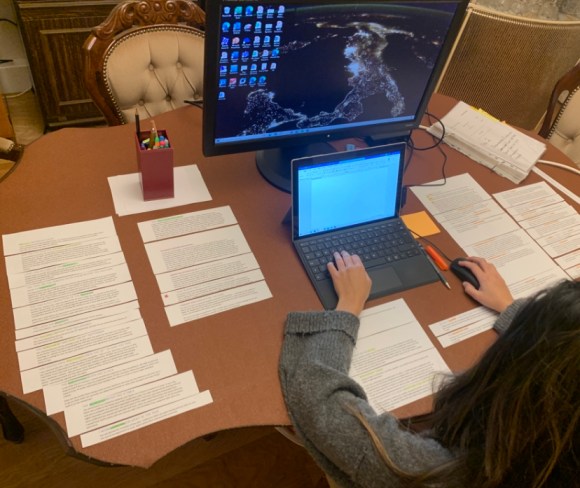
But however much you prepare, being cross-examined is not fun. It is stressful and nerve-wracking, so my best advice would be not to rush your answers. Take the time to really think. Don’t panic and lie – even if you think it will help your case and it’s the tiniest most insignificant detail, because if you’re caught out, even if you’ve lied only once, you immediately lose your credibility.
In any case, allowing my landlord to read out that summary at the beginning meant that it came as no surprise to me that the hearing once again lasted for the entire day and closing arguments had to be rescheduled for another court date….
Closing Arguments / Court Hearing (3)
So, I don’t know if my experience was the norm, but my Judge allowed my landlord to interrupt him whilst he was giving his verdict and submit new evidence!
When he was making his decision as to quantum, despite my barrister pointing out to him the he had miscalculated my claim by £150, all he said was “Well, I’ve already done it, what is another £150…”
So, after all of this, what have I learned in the process?
TENANT V LODGER??
When I was studying for my LLB, I learned about the Landlord and Tenant relationship. The only mention of Lodger’s was made in passing to differentiate them to Tenants – Aslan v Murphy (all the law students out there yawning as soon as I mention this case), told us that a Tenant was different to a Lodger because they had exclusive possession (the right to refuse entry to their Landlord).
It is also a well known fact that Tenants have more legal rights than Lodgers:
- Landlords do not have to protect a Lodger’s deposit;
- There is no ‘standard notice period’ to evict a Lodger;
- Lodger’s have no privacy – going back to exclusive possession, you cannot have a lock on your bedroom door.
But what rights do Lodgers have then??
The Tenant Fees Act 2019
Anyone that has a legal issue, the advice is always to check the Citizens Advice website. But back when I was preparing for my case, their website was outdated – with no mention of the TFA at all! It is your job to be informed of your rights, it’s the only way to protect yourself (I am not writing this blog as a substitute for far more legitimate sources of information, rather just to raise awareness of some of the issues I encountered so you can at least know the types of questions you should be asking), but for this reason, it is so important for free legal services to remain up to date.
This Act applies to Tenants AND Lodgers. Landlords can now be fined up to £5,000 by the Trading Standards if they breach this Act by charging prohibited payments (for consistent breaches, the punishment could even be imprisonment)! With this in mind, always make sure you check your agreement:
- Does the Tenancy Deposit exceed 5 (in some cases 6) weeks annual rent?
- Does the Holding Deposit exceed 1 weeks rent?
- Has your agreement been delivered on time? If not, has your holding deposit been returned to you?
If you are unsure as to what the answer should be – check out my guidance here –
Health & Safety Regulations
From Gas Safety certificates to ensuring their furniture is fire safe, Landlords must comply with these regulations – regardless of whether you are a Tenant or a Lodger – see here for more details.
Beware of free online websites
Websites like SpareRooms are great – they’re free (for the most part), quick and easy to use BUT with ease of access comes risks, as with anything. Always check their credentials, try to rent from approved agencies, insist on viewing the property in person (even now, during lockdown, don’t be pressured into signing an agreement without seeing it in person), try to get a break clause negotiated into the contract and always check the type of agreement you are signing.
What they don’t teach in Law School
LPC students – word of advice – court is NOTHING like our advocacy exams. I never interrupted the other party when she was talking. I was polite and respected all the rules. I never for one instance thought that this would put me at a disadvantage. When my turn came, she interrupted me at every sentence, spoke over me, completely drowned me out.
From the Letter of Claim, to the Directions Questionnaire and the Statements of Case – we learnt about the strict rules for service. There are severe consequences if you are even a minute late. So much emphasis is placed on this (I spent hours in the library trying to memorise the dates) and yet the Court didn’t seem to care about late delivery. I never had any experience with Court, so based on my studies alone, I think it’s fair to say I had a very idealised idea of how the law should operate. Sure, if everyone followed the rules strictly, it should work perfectly. But I guess as with anything, this is rarely the case.
What I didn’t read in the textbooks was that even IF you are 100% in the right, you have all the evidence and the strongest case in the world, you STILL might lose!
So, should I settle?
When should I settle?
If you’re worried about wasting money (litigation is never 100% guaranteed) or you just don’t want the hassle, you can settle at any stage of the proceedings.
If your case exceeds £10,000, ask a lawyer to draft you a part-36 letter. This is essentially a settlement offer but it puts more pressure on the other side to accept/make a counter-offer as if they lose the case or win but for a sum lower than your other, there are financial penalties.
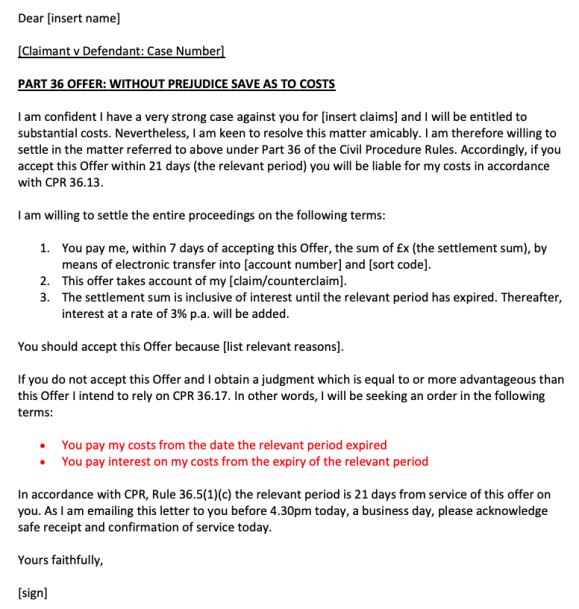
But with a small claim, (less than £10,000) this won’t apply. Of course you can still make a standard settlement offer – but it can turn out to be a huge waste of time as the other side can accept then later change their mind. To try and avoid this, if you want to settle, make sure you do it in front of a judge. Although he will not be present when you are negotiating the price, when he returns to the room and the settlement is agreed by both parties, that is final. However, if you decide to settle outside of court, there is nothing to stop the other side agreeing initially and then later rejecting your offer. Alternatively, you could get the other side to put it in writing to the court that they are accepting the offer.
So, when should I settle? The best piece of advice I received this year was not to let my pride get in the way – even if you think you have an air tight case, sometimes it’s better to suffer the loss if it means getting your life back.
Practising certificates / County Court judgments
Law Students – don’t let anyone try and intimidate you by using your profession against you. In the beginning, I was willing to part with my life savings to protect my future (a career that had not even begun yet) because I thought if I lost, I would have a county court judgement against my name and would never be able to get a practising certificate. Let me just clear one thing up – Yes, being able to deal with your finances is a very important conduct issue but that does not mean you cannot go to court to defend yourself.
In case you lose, (always ensure you are prepared every eventuality), just make sure you have sufficient funds to pay off the debt within the deadline stipulated in the court notice. If you do not, the other side can submit the unsatisfied Judgement to the Register, which will have a negative effect on your credit rating – so, if you’re as forgetful as me, make sure you set a reminder on your phone!
Appeals
As a side note (if you’re super cynical like me and go into a hearing already planning for your loss) – you can appeal — the ‘clock will stop’ on your 28 day time period until determination.
It’s funny how things have a way of working themselves out. However bad this year may have been, it will always be one of the best for me, starting at Brachers. My job every day is dealing with cases just like mine, so whatever mistakes I may have made in my personal hearing, I’m lucky I get to learn from them in my professional life.
Would I do it all again?
So, as much as I am reluctant to admit – my mum was right. I was lucky in a way for this experience. Not only have I grown professionally – how many 22 year olds can say they went to court and represented themselves – but personally as well. I always remember going to interviews and them telling me “I just seemed too young to be a lawyer.” My careers advisor told me I needed to “create a shell of myself – act bolshy.” I was so upset, thinking why do I have to act like someone I’m not? Am I not good enough how I am to be a lawyer? This year, I realised my interviewers were just trying to be nice – I was too shy, too much of an introvert to be a good lawyer. For the first time in my life, I was forced to stand up for myself and it felt amazing. I don’t know why I automatically associated ‘bolshy’ with so many negative connotations when all it means is being confident to voice your opinion. So far from putting me off the law, if you are reading this, I want to say a big THANK YOU to my landlady:
“Despite your attempts to make sure I failed my course (harassing me the night before every exam), and your threats to make sure I would end up homeless on the streets, you helped me realise that I will make a great lawyer one day. And you’ve given me the best example of what NOT to be.”
My Final Advice to You
your agreement
Okay so first and foremost, and I cannot stress this enough – read your agreement and if you are unsure of anything do NOT sign it.
Do not assume that you will be getting a Tenancy Agreement – even if it is described as a tenancy does not mean that you won’t be classified as a lodger. If you’ve gotten this far, I’m sure you’re all experts by now – the key to a tenancy is exclusive possession. If you cannot lock your door, that should be a warning sign to you all.
recommendations/assumptions
Never take recommendations from anyone – even if you trust them with your life. Always meet your potential landlord in person. Give yourself TIME to think and consider ANY legal document before you sign it and make a commitment.
Never assume that a person is honest and has integrity based on their looks/their profession or anything else for that matter.
representation
Every lawyer I spoke to told me most people represent themselves in a small claims hearing –
That may well be true but my advice is if you are up against a qualified lawyer, or you’re quite young and naive like I was – go to a barrister right away. I had a legal background but I had no idea what I was doing (using my dispute resolution textbook to figure out how on earth to write a witness statement). It didn’t seem to matter that I had never lied once in the hearing. That I had ALL the evidence (over 500 pages in comparison to her 10 pages…). I was made to feel that because I was younger, more inexperienced, I was automatically at fault. Thankfully, my court case hasn’t been finalised yet, it’s part-heard (whatever that means), so I was able to find the very best barrister to represent me – after only 5 minutes of talking to him on the phone, I started to feel like I could win.
Evidence
Bring spare copies of your court bundle — try to anticipate every eventuality (like the other side pretending they never received it or had technical difficulties opening it).
Financial consequences
Usually it costs to submit any kind of application to the court – to issue a claim, a counterclaim, to make an amendment etc. but you may be able to do what I did and apply for help with fees using Form EX160. I remember making my initial request, calling up the court and submitting an application of my (extremely) overdrawn student bank account and her laughing! Usually, the first thing you should do when you are thinking about taking someone to court is to assess their financial viability…So, my advice to students / those of limited means facing horrendous landlords is if you have a very strong case, don’t be afraid of the financial consequences of going to court because chances are it won’t cost you.
There are different pre-action protocols that the parties must comply with when instigating proceedings. Failure to comply with a Pre-action Protocol will be taken into account – you may be ordered to pay additional costs so make sure you check them out here as another way to reduce your potential financial consequences.
work on yourself
Stand up for yourself – I remember after the hearing, I just cried, for the entire night. I felt completely out of my depth, having to face a woman more than twice my age, that would just lie constantly and try and turn everyone against me. Regardless of the weight of my arguments, she would just say ‘I’m a lawyer, she’s a child.’ (p.s I was 22 at the time). Okay yes, I was completely new to everything BUT your age, your experience, your profession, your looks – simply writing ‘female leader’ after the end of your name in an email isn’t what matters. It’s the evidence. You can’t go through life, winning by being a bully. So, if the other party is talking over you, don’t just sit back and do what I did – just talk louder. Shout.
 Legally Correct